
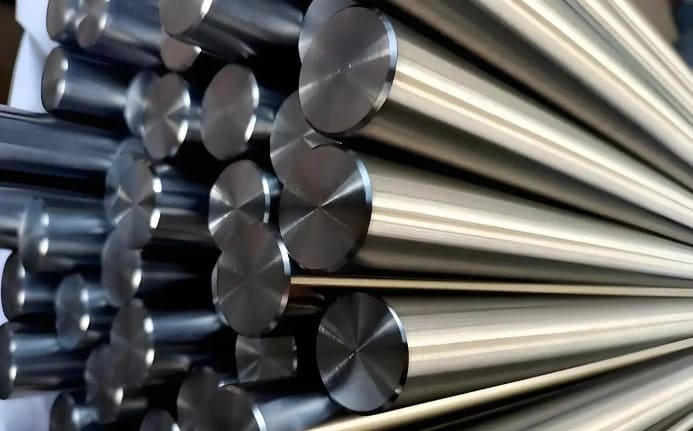
If you’ve searched for the cost of titanium per pound, you’ve probably noticed something frustrating — every source gives you a different number. That’s not because the sources are wrong. It’s because titanium doesn’t have one fixed price per pound, and understanding why will save you real money on your next project.
Here’s the short answer first. As of 2026, you can expect roughly $2–6 per pound for scrap and sponge-equivalent material, $6–15 per pound for commercially pure Grade 1/Grade 2 mill products, and $20–35+ per pound for aerospace-grade Grade 5 Ti-6Al-4V bar and plate. And if you’re buying custom CNC-machined titanium parts, the price per pound stops being the right question entirely — we’ll explain why below.
In this guide, we’ll walk you through titanium pricing by grade, form, and quantity, then cover the part most price articles skip: what actually happens between “titanium per pound” and the final quote you receive for a machined component.
How Much Does Titanium Cost Per Pound in 2026?
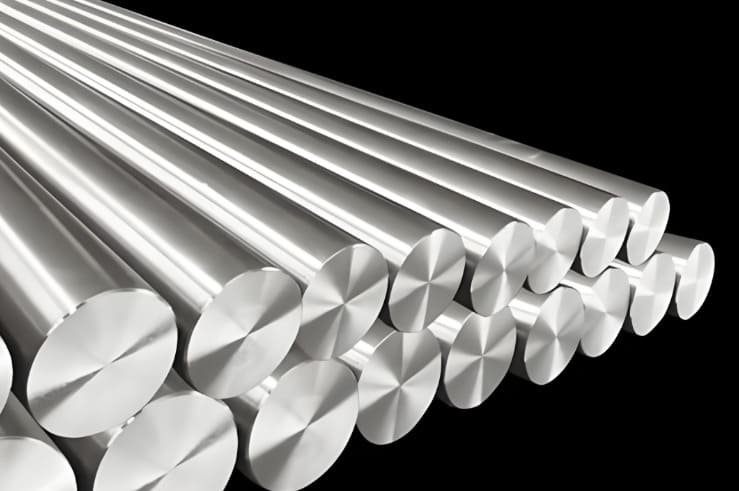
Let’s start with the numbers you came for. The table below summarizes typical 2026 price ranges for the most common forms of industrial titanium. Treat these as planning benchmarks — your actual price will depend on quantity, certification, supplier, and market conditions at the time of order.
| Titanium Type | Typical Price Range (USD) | Best Use |
|---|---|---|
| Titanium sponge | ~$5–6/lb equivalent | Raw material benchmark for melters |
| Titanium scrap | ~$2–5/lb depending on grade and cleanliness | Recycling, remelting feedstock |
| Grade 1 / Grade 2 (CP titanium) | ~$6–15/lb | Chemical processing, marine, corrosion-resistant parts |
| Grade 5 (Ti-6Al-4V) bar & plate | ~$20–35/lb or higher | Aerospace, robotics, medical, high-strength structural parts |
| Titanium powder | Higher than common bar/plate | Additive manufacturing (3D printing) |
| CNC-machined titanium parts | Not priced by raw weight | Custom precision components — quoted per part |
Before you use these numbers, there are three things you should understand about where they come from.
Sponge is the upstream benchmark — not something you’ll buy.
Titanium sponge is the porous raw metal that comes out of the refining process. According to USGS data, the average import price of titanium sponge into the United States in 2025 was approximately $12 per kilogram — about $5.44 per pound. You won’t purchase sponge directly, but it anchors the cost of everything downstream, including the bar your parts are machined from.
The U.S. imports 100% of its titanium sponge.
USGS reports that no titanium sponge was produced domestically in the United States in 2025. Every pound of titanium melted into U.S. mill products starts as imported sponge or recycled scrap. For you as a buyer, this means U.S. titanium prices respond to supply chain disruptions, trade policy, and import duties in a way that steel or aluminum prices simply don’t.
Commodity tickers are not procurement prices.
You may have seen titanium prices on trackers like Trading Economics. Those quotes are based on financial instruments — OTC and CFD products that follow the commodity benchmark. They’re useful for watching trends, but they are not the price you’ll pay for certified Grade 5 bar from a mill or distributor. Your real procurement price includes alloying, melting, forming, certification, and distribution margins on top.
Why Titanium Does Not Have One Fixed Price Per Pound?
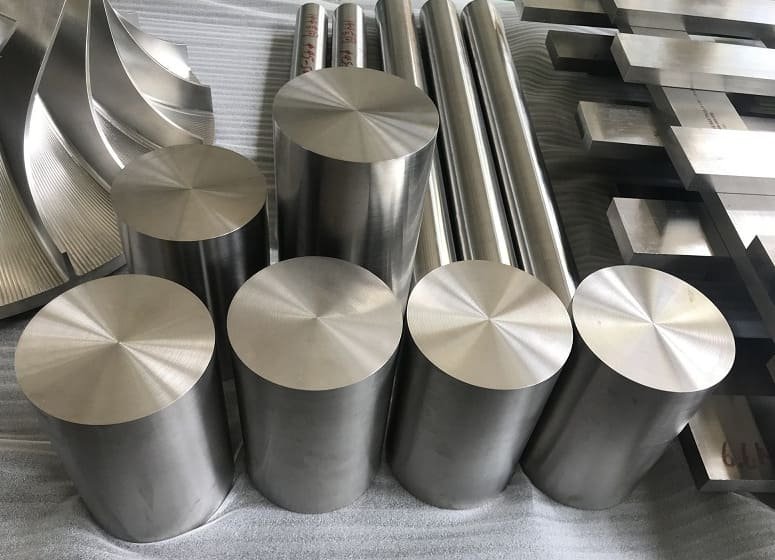
When you ask “how much is titanium per pound,” the honest counter-questions are: which grade, in what form, how much of it, and with what paperwork? Six variables drive most of the price spread — and knowing them helps you read any quote you receive.
Grade and Alloy Composition
Commercially pure titanium (Grades 1–4) contains no deliberate alloying elements, which keeps production costs down. Grade 5 (Ti-6Al-4V) adds aluminum and vanadium — and vanadium in particular is expensive — plus tighter melt control. Medical-grade Ti-6Al-4V ELI (Grade 23) adds strict limits on trace elements and full traceability requirements, pushing the price higher still.
Product Form: Sponge, Scrap, Bar, Plate, Tube, Powder
Every conversion step adds cost. Sponge must be melted into ingot; ingot must be forged and rolled into bar or plate; bar must be drawn, straightened, and inspected. Titanium powder for 3D printing requires atomization — converting the metal into fine, uniform spherical particles — which is why powder typically costs more per pound than bar or plate of the same alloy.
Quantity and MOQ
Mill pricing rewards volume. If you order a full heat lot of Grade 5 bar, you’ll pay a very different per-pound price than someone cutting a single 12-inch length from a distributor. For prototype quantities, expect your per-pound material cost to run as much as double the production-volume price.
Certification: ASTM, Aerospace, and Medical Traceability
Material certified to ASTM B348 costs more than uncertified stock — and that’s before you add anything else. Layer on AS9100-aligned aerospace traceability or ISO 13485 medical documentation, and the same chemistry commands a further premium. What you’re paying for is testing, paperwork, and accountability, not extra metal.
Country of Origin and Import Duties
Because the U.S. imports all of its sponge, tariffs and origin restrictions feed directly into your landed cost. If you’re buying for aerospace or defense programs, country-of-melt restrictions can also narrow your supplier pool — and a smaller pool means higher prices.
Machining Difficulty and Material Waste
This last variable matters most if you’re buying parts rather than raw stock, so we’ve given it a full section below. The short version: “price per pound” is a material price — not a part price.
Titanium Price Per Pound by Grade
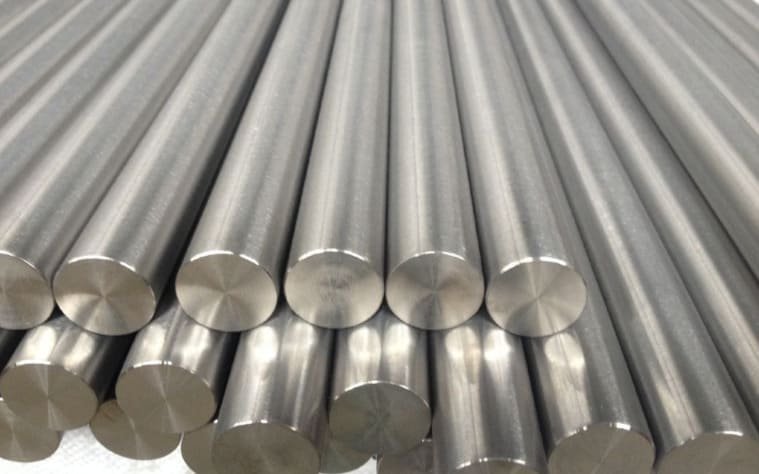
If you’re sourcing machined industrial components, two grades will cover the vast majority of your applications. Here’s how they compare.
| Grade | Description | Cost Position | Common Applications |
|---|---|---|---|
| Grade 2 | Commercially pure titanium | Lower | Chemical processing, marine hardware, heat exchangers, corrosion-resistant parts |
| Grade 5 / Ti-6Al-4V | Titanium alloy with 6% aluminum, 4% vanadium | Higher (often 2–3× Grade 2) | Aerospace structures, robotics, medical devices, high-strength CNC parts |
| Grade 23 / Ti-6Al-4V ELI | Extra-low-interstitial version of Grade 5 | Premium | Implants, surgical instruments, fracture-critical aerospace parts |
Grade 2 is the workhorse for corrosion-driven applications. It gives you excellent resistance to seawater and many chemicals, moderate strength, and the best machinability among common titanium grades. If your part doesn’t need a high strength-to-weight ratio, Grade 2 is usually your most economical titanium choice — and your machining quotes will reflect that, too.
Grade 5 (Ti-6Al-4V) is the most widely used titanium alloy in the world, and for good reason. Per ASM/MatWeb data, it combines high yield and tensile strength with low density and strong corrosion resistance — the default combination for high-performance structural components. That performance is exactly why it costs more, both as raw material and at the machine, where its strength and heat behavior force slower cutting speeds.
Grade 23 (Ti-6Al-4V ELI) is chemically similar to Grade 5 but with tighter limits on oxygen, nitrogen, and iron — “ELI” stands for extra-low interstitials — which improves fracture toughness for implantable and fracture-critical use. Expect a clear premium, and expect lot-level traceability to be non-negotiable.
Titanium Cost Per Pound vs. Titanium CNC Machining Cost
Now we come to the question that probably brought you here in the first place: why is your titanium part quote so much higher than the price of titanium per pound?
The answer is that a machined titanium part’s price is built from many layers — and raw material is only one of them:
- Raw material cost — the billet or bar, at the certified grade you specified
- Material waste rate — the metal that leaves your part as chips
- CNC machining time — titanium cuts slowly, and machine hours add up
- Tool wear — titanium consumes carbide tooling far faster than aluminum or mild steel
- Coolant and heat control — titanium’s low thermal conductivity concentrates heat at the cutting edge, demanding high-pressure coolant and conservative parameters
- Tolerance requirements — every tightening of a tolerance band adds setup, in-process measurement, and risk
- Surface finish — fine finishes mean extra passes or secondary operations
- Inspection and certification — CMM reports, material certs, first-article inspection
- Order quantity — setup and programming costs spread across the run
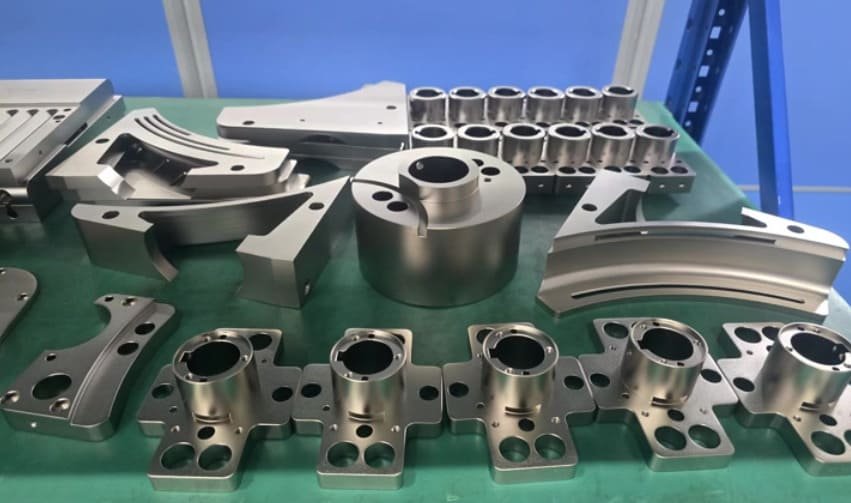
Let’s make the waste factor concrete with an example from our own shop floor. A 2 lb titanium billet does not mean your finished part contains 2 lb of titanium. If the finished part weighs 0.8 lb, the other 1.2 lb became chips on the machine. You paid Grade 5 prices for 100% of that material — but you ship only 40% of it. This buy-to-fly ratio, combined with slow cutting speeds and rapid tool wear, is why machined titanium parts cost far more than the raw per-pound price suggests.
Here’s the takeaway we want you to remember: for custom titanium CNC parts, the raw titanium price per pound is only one input to your final cost. In many precision applications, machining time, tool wear, tolerance control, and inspection requirements will affect your quote more than the material itself. Two RFQs for parts of identical weight can differ in price by 3–5× purely on geometry, tolerance, and certification scope.
So if you’re budgeting a titanium project, the most useful number isn’t the per-pound spot price — it’s a quote against your actual drawing from an experienced titanium CNC machining supplier.
Why Is Titanium More Expensive Than Steel or Aluminum?
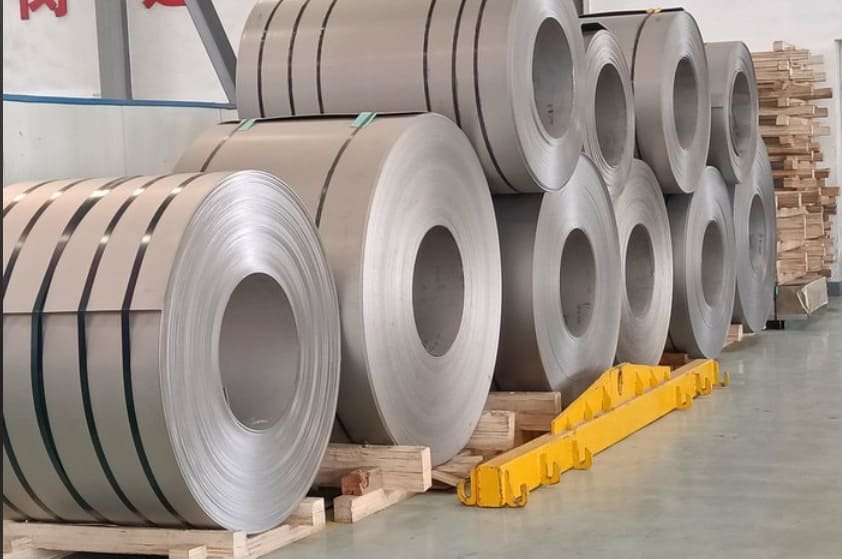
Here’s something that surprises many buyers: titanium is not rare. It’s the ninth most abundant element in the Earth’s crust. Its cost comes from what it takes to turn ore into usable metal — and usable metal into finished parts.
Extraction and melting are energy-intensive.
The Kroll process used to produce titanium sponge is a multi-stage, batch-based, energy-hungry operation, and melting must happen under vacuum or inert atmosphere to keep the metal from reacting with air. There’s no titanium equivalent of a cheap blast furnace.
Machining is slow and hard on tools.
Titanium work-hardens, springs back under the cutter, and chemically reacts with cutting tools at high temperatures. Cutting speeds run at a fraction of what aluminum allows, and carbide inserts wear out quickly.
Heat concentrates at the cut.
Titanium’s relatively low thermal conductivity means cutting heat stays at the tool edge instead of flowing away with the chip — which forces conservative speeds and aggressive cooling.
High-end applications demand paperwork.
Aerospace, medical, defense, and marine buyers require certified, traceable material. Per USGS, aerospace remains the dominant end use for titanium metal, with the remainder going to armor, chemical processing, marine hardware, medical implants, and power generation. Demand from these high-specification industries keeps pricing firm for certified high-grade material — even when commodity sentiment softens.
For comparison: 6061 aluminum bar often costs a few dollars per pound and machines 3–4× faster, while common stainless steels sit between the two. Titanium’s premium buys you a strength-to-weight ratio and corrosion performance the other metals can’t match. The engineering question you should ask is whether your application actually needs it.
How to Reduce the Cost of Titanium Parts
If titanium is the right material for your application, you still have real room to control cost. Here are seven levers we recommend reviewing before you send out your next RFQ:
1. Choose Grade 2 instead of Grade 5 when strength is not critical.
For corrosion-driven applications, CP titanium cuts your material cost substantially — and it machines more easily, too.
2. Optimize part geometry to reduce material removal.
Design near-net shapes where possible. Every cubic inch you don’t have to cut away saves you twice — once in material, once in machine time.
3. Avoid unnecessarily tight tolerances.
Apply precision only where the part functionally needs it. Blanket ±0.0005″ callouts on non-critical surfaces inflate quotes fast.
4. Use standard bar and plate sizes.
Designing around stock dimensions helps you avoid custom mill orders and long lead times.
5. Combine orders to spread setup costs.
Programming, fixturing, and first-article inspection are largely fixed costs — larger batches drive your per-part price down.
6. Confirm whether full material certification is really required.
If your application doesn’t need aerospace or medical traceability, don’t pay for it.
7. Work with an experienced titanium machining supplier.
Shops that run titanium daily have the tooling strategies, coolant systems, and parameter libraries to machine it efficiently — and that efficiency shows up directly in your quote.
One more tip: a supplier offering custom CNC machining services with real titanium experience can often review your drawing and suggest grade, tolerance, or geometry adjustments before quoting. In our experience, that early design review is frequently the single biggest cost lever available to you.
FAQ About Titanium Cost Per Pound
How much does titanium cost per pound today?
As of 2026, expect roughly $2–5/lb for titanium scrap, $6–15/lb for CP Grade 2 mill products, and $20–35/lb or more for Grade 5 Ti-6Al-4V bar and plate, depending on size, quantity, and certification. Machined titanium parts are quoted per part — not per pound.
Why is Grade 5 titanium more expensive than Grade 2?
Grade 5 contains aluminum and vanadium, requires tighter melt control, and is harder to machine. Its higher strength also concentrates demand in aerospace and medical markets that pay for certified material.
Is titanium more expensive than stainless steel?
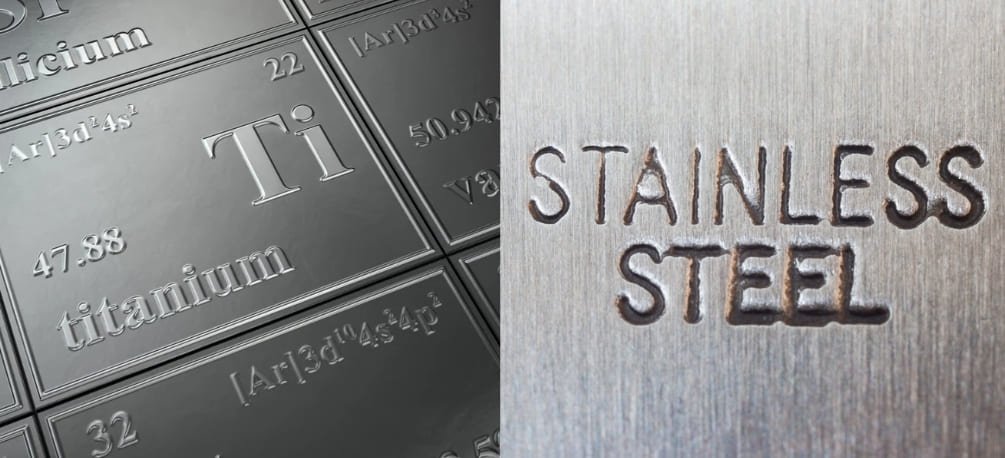
Yes — significantly. Common stainless grades typically cost a fraction of titanium per pound and machine faster. Titanium earns its premium where weight, fatigue performance, or extreme corrosion resistance justify it.
Is titanium more expensive than gold?
No, not remotely. Gold trades per troy ounce at prices thousands of times higher than titanium per pound. Titanium’s reputation for being “precious” comes from its performance — not its market price.
How much does titanium cost per kg?
Multiply the per-pound figures by 2.2: roughly $13–33/kg for Grade 2 products and $44–77+/kg for Grade 5 mill products. For reference, the USGS-reported 2025 U.S. import price for titanium sponge was about $12/kg.
What is the price of titanium scrap per pound?
Typically $2–5/lb, depending heavily on alloy grade, cleanliness, and segregation. Clean, single-alloy Grade 5 turnings command more than mixed or contaminated scrap.
Does titanium material cost affect CNC machining quotes?
Yes — but usually less than you’d expect. For precision parts, machining time, tool wear, tolerances, and inspection often outweigh the raw material line item in your final quote.
What is the best titanium grade for CNC machined parts?
Grade 5 (Ti-6Al-4V) for strength-critical aerospace, robotics, and medical components; Grade 2 for corrosion-resistant chemical and marine parts where high strength isn’t required; Grade 23 ELI for implantable devices.
Have a titanium part drawing in hand? The fastest way to get a real number — instead of a per-pound estimate — is to request a quote for CNC machined titanium components and let our engineering team review your grade, tolerance, and quantity requirements with you.