
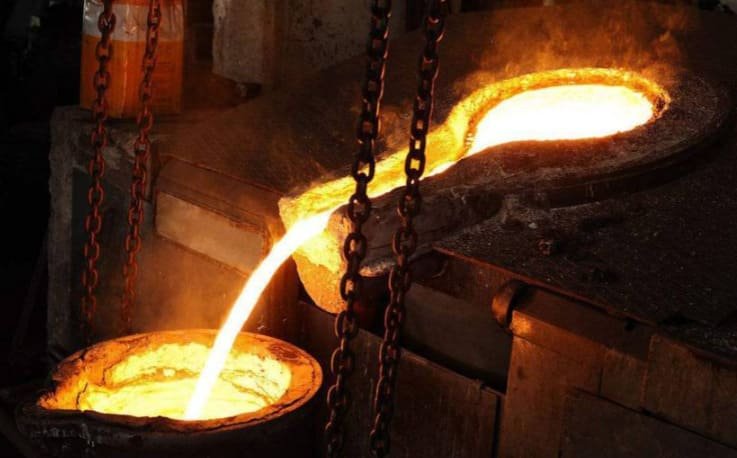
Titanium stands out among high-temperature metals for one striking reason — its titanium melting point sits at 3,034°F (1,668°C). That single number shapes how engineers select materials for the most demanding environments on Earth and beyond.

When you’re designing parts for a jet engine or a surgical implant, you need a metal that can handle extreme heat without giving up strength. Titanium thermal properties make this possible. The metal pairs its impressive temperature resistance with a density nearly half that of steel — a rare combination in the world of refractory metals properties.
Titanium temperature resistance plays a direct role in why companies like Boeing, Lockheed Martin, and Medtronic rely on this metal every day. From turbine blades spinning at thousands of RPMs to hip replacements lasting decades inside the human body, titanium earns its place through performance under pressure.
Understanding what drives this high melting point — and how it affects machining, welding, and design choices — gives you a real edge in material selection. This guide breaks down the science, the numbers, and the practical impact so you can make informed decisions for your next project.
Understanding Titanium as a High-Performance Metal
When you explore the world of high-performance metals, titanium stands out for good reason. Its unique blend of strength, light weight, and thermal resilience makes it a top choice across demanding industries. Let’s break down what makes titanium so special — starting at the atomic level.

Chemical Properties and Atomic Structure
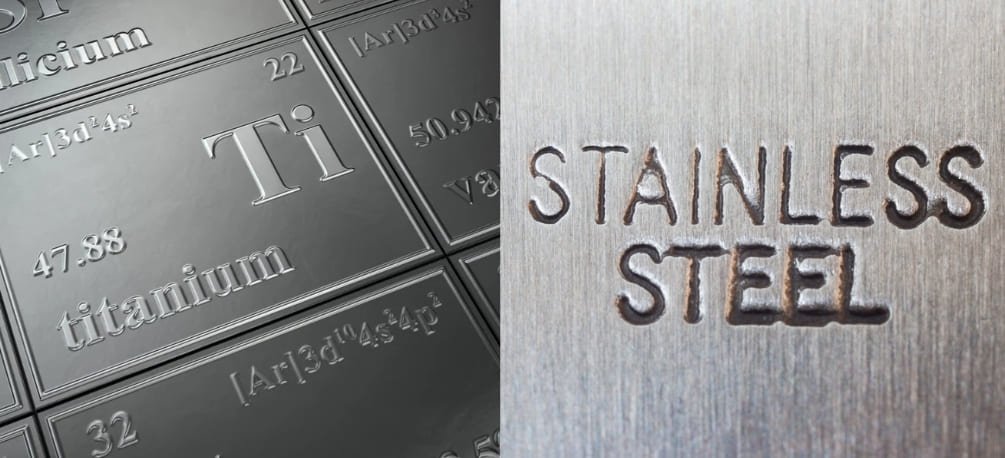
The titanium atomic structure begins with atomic number 22. Its electron configuration is [Ar] 3d² 4s², which gives it strong bonding capabilities and impressive thermal stability. At room temperature, titanium forms a hexagonal close-packed (HCP) crystal structure. Above approximately 882°C (1,620°F), it shifts to a body-centered cubic (BCC) arrangement — a transformation that directly influences its titanium chemical properties and behavior under heat.
Physical Characteristics That Define Titanium
The titanium physical properties that set it apart include:
- A density of just 4.5 g/cm³ — about 45% lighter than steel
- Tensile strength of roughly 434 MPa in its commercially pure form
- An exceptional strength-to-weight ratio that outperforms both steel and aluminum
- Outstanding corrosion resistance in seawater and acidic environments
These traits make titanium incredibly versatile for engineers designing parts that must be both strong and lightweight.
Titanium’s Position Among Refractory Metals
A refractory metals comparison reveals where titanium fits in the broader family of heat-resistant elements. While it doesn’t match the extreme melting points of tungsten or tantalum, its far lower density gives it a distinct advantage in weight-sensitive applications.
| Metal | Melting Point (°C) | Density (g/cm³) | Tensile Strength (MPa) |
|---|---|---|---|
| Titanium | 1,668 | 4.5 | 434 |
| Tungsten | 3,422 | 19.3 | 550 |
| Molybdenum | 2,623 | 10.2 | 324 |
| Tantalum | 3,017 | 16.6 | 285 |
As you can see, titanium delivers competitive strength at a fraction of the weight — a key reason it remains one of the most sought-after high-performance metals in modern engineering.
What is the Melting Point of Titanium?
Knowing the exact melting point of titanium helps you select the right material for high-heat applications. This metal stands out for its remarkable titanium thermal stability — a trait that makes it a top choice across demanding industries. Let’s break down the numbers and see what influences them.

Exact Temperature Values in Different Units
The titanium melting temperature Celsius value is 1,668°C. When converted, the titanium melting point Fahrenheit reaches 3,034°F. On the Kelvin scale, that equals 1,941 K. These figures apply to commercially pure titanium (Grade 2).
Alloys shift this range. Ti-6Al-4V — the most widely used titanium alloy — melts between 1,604°C and 1,660°C due to its aluminum and vanadium content.
Factors That Shift the Melting Range
Several elements can raise or lower titanium’s melting point:
- Aluminum — raises the beta-transus temperature but slightly lowers the melting range.
- Vanadium — acts as a beta stabilizer and reduces the melting point.
- Molybdenum — increases strength at high temperatures yet narrows the melting window.
The purity of the base metal matters too. Oxygen and nitrogen impurities can influence titanium thermal stability and alter phase transition behavior.
How It Stacks Up Against Other Metals
A melting point comparison metals chart puts titanium’s heat resistance in clear perspective. When you examine titanium vs steel melting point data, the gap is significant — titanium withstands roughly 300°C more than standard carbon steel.
| Metal | Melting Point (°C) | Melting Point (°F) |
|---|---|---|
| Aluminum (6061) | 660 | 1,220 |
| Carbon Steel (1020) | 1,370 | 2,500 |
| Stainless Steel (304) | 1,400 | 2,552 |
| Titanium (Grade 2) | 1,668 | 3,034 |
| Tungsten | 3,422 | 6,192 |
As you can see, titanium sits well above steel and aluminum — yet below tungsten. This balance of high melting point, low density, and corrosion resistance is what makes titanium so valuable in aerospace, medical, and marine engineering.
The Science Behind Titanium’s High Melting Point
Titanium’s remarkable thermal energy resistance comes down to what happens at the atomic level. To understand why this metal melts at 1,668°C (3,034°F), you need to look at the forces holding its atoms together.
The titanium electron configuration is [Ar] 3d² 4s². Those two d-orbital electrons play a critical role. They participate in strong metallic bonds by contributing to a shared “sea” of delocalized electrons. This metallic bonding titanium exhibits is unusually robust because d-electrons create more overlap between neighboring atoms — increasing the atomic bonding strength well beyond what you’d find in simpler metals like aluminum or copper.
The titanium crystal lattice gives the metal its structural backbone. At room temperature, titanium arranges itself in a hexagonal close-packed (HCP) structure — known as the alpha phase. When heated to 882°C (1,620°F), it transitions to a body-centered cubic (BCC) beta phase. This shift changes mechanical properties but does not break the bonds entirely. You still need nearly twice that temperature to overcome the atomic bonding strength and reach the melting point.
| Phase | Crystal Structure | Temperature Range | Key Characteristic |
|---|---|---|---|
| Alpha (α) | Hexagonal Close-Packed (HCP) | Below 882°C (1,620°F) | High creep resistance, strong at low temperatures |
| Beta (β) | Body-Centered Cubic (BCC) | 882°C–1,668°C (1,620°F–3,034°F) | Greater ductility, easier to form |
| Liquid | No ordered structure | Above 1,668°C (3,034°F) | Complete bond disruption |
The thermal energy resistance of titanium stems directly from this combination of strong d-electron bonding and tightly packed lattice geometry. Breaking these bonds requires enormous energy input — which is exactly why titanium performs so well in the extreme industrial applications we’ll explore next.
Industrial Applications That Depend on Titanium’s Thermal Properties
Titanium’s exceptional melting point — 1,668°C (3,034°F) — makes it a go-to material across demanding industries. Its ability to maintain structural integrity under extreme heat and corrosive conditions drives its use in sectors where failure is not an option. Let’s explore how specific industries rely on high-temperature titanium uses every day.
Aerospace and Aviation Components
Titanium aerospace applications are critical in modern flight. Boeing uses titanium alloys in roughly 15% of the 787 Dreamliner’s airframe. Airbus relies on titanium in the A350 XWB’s engine nacelles and landing gear. Jet engine compressor blades and discs routinely endure temperatures up to 600°C — a range where titanium alloys retain their strength while staying lightweight.
Medical Implants and Biomedical Devices
Companies like Zimmer Biomet and Stryker depend on titanium medical implants for hip and knee replacements. Titanium is biocompatible, meaning the human body accepts it without rejection. It can withstand repeated autoclave sterilization cycles at 134°C without degrading — a key requirement in surgical environments.
Chemical Processing Equipment
Titanium chemical resistance makes it ideal for heat exchangers, reaction vessels, and piping systems. Haynes International and other specialty manufacturers build equipment that handles hydrochloric acid, chlorine gas, and other aggressive chemicals. Titanium resists pitting and crevice corrosion even at elevated temperatures.
Marine and Offshore Engineering
Titanium marine engineering plays a vital role on offshore platforms operated by Shell and BP. Seawater cooling systems, riser pipes, and subsea connectors all benefit from titanium’s resistance to saltwater corrosion across wide temperature ranges.
| Industry | Key Application | Operating Temperature Range | Primary Benefit |
|---|---|---|---|
| Aerospace | Jet engine compressor blades | Up to 600°C | High strength-to-weight ratio |
| Medical | Hip and knee implants | Up to 134°C (sterilization) | Biocompatibility |
| Chemical Processing | Heat exchangers | Up to 500°C | Corrosion resistance |
| Marine/Offshore | Seawater cooling systems | -2°C to 80°C | Saltwater corrosion resistance |
Processing and Manufacturing Considerations at High Temperatures
Working with titanium at extreme temperatures demands specialized equipment and strict process control. From extracting raw metal to shaping finished parts, every step in titanium fabrication methods requires careful attention to atmospheric conditions and precise thermal management.
Smelting and Extraction Methods
The titanium smelting process begins with converting titanium ore into titanium tetrachloride (TiCl₄). This compound is reduced using magnesium at temperatures exceeding 800°C in a sealed reactor. Known as the Kroll process titanium extraction method — developed by William Kroll in the 1940s — it remains the industry standard. Major producers like VSMPO-AVISMA and Timet rely on this technique to create titanium sponge, the raw form used for further processing.
Welding and Fabrication Challenges
Titanium becomes highly reactive with oxygen and nitrogen above 500°C. This makes titanium welding techniques uniquely demanding. You must shield the weld zone with inert gases — typically argon or helium — to prevent contamination. Even the back side of a weld joint needs gas coverage. Without proper shielding, the metal becomes brittle and prone to cracking.
- Use trailing shields to protect cooling weld areas
- Purge enclosed joints with argon before striking an arc
- Keep interpass temperatures below 150°C to maintain integrity
Heat Treatment Processes for Titanium Alloys
Titanium heat treatment optimizes strength, ductility, and fatigue resistance in alloys like Ti-6Al-4V. The process involves two key stages:
| Stage | Temperature Range | Purpose |
|---|---|---|
| Solution Treating | 900–1,000°C | Dissolves alloying elements into the titanium matrix |
| Aging | 450–600°C | Precipitates fine particles that strengthen the alloy |
Getting these parameters right is critical. Even small deviations can reduce the mechanical performance you need for aerospace and medical applications.
Why Titanium’s Melting Point Makes It Invaluable for Modern Technology
Titanium’s ability to withstand extreme heat — up to 3,034°F (1,668°C) — is pushing the boundaries of what engineers can build. From hypersonic aircraft to deep-space exploration, titanium technology applications are reshaping industries that demand peak performance under brutal conditions.
Lockheed Martin’s work on hypersonic vehicles relies on titanium’s thermal resilience. At speeds exceeding Mach 5, surface temperatures can surpass 2,000°F. Few metals survive that kind of punishment. NASA uses titanium in spacecraft heat shields for the same reason — it maintains structural integrity when re-entering Earth’s atmosphere. These are not theoretical use cases. They represent real-world advanced materials engineering at its finest.
Emerging sectors are driving titanium future applications into new territory. Consider these growing fields:
- Nuclear reactor components — where radiation resistance and thermal stability are critical
- Geothermal energy systems — involving corrosive fluids at temperatures above 500°F
- Additive manufacturing — enabling complex, heat-resistant parts with less material waste
The numbers tell a compelling story about titanium industry growth. Global market projections highlight the scale of demand:
| Year | Projected Global Market Value | Primary Growth Driver |
|---|---|---|
| 2023 | $8.1 billion | Aerospace defense contracts |
| 2025 | $9.6 billion | Energy and medical sectors |
| 2030 | $12.3 billion (estimated) | Hypersonics and clean energy |
Each of these milestones reflects a broader trend in high-temperature materials innovation. Industries need metals that won’t fail when exposed to extreme environments — and titanium delivers exactly that. As you evaluate materials for demanding projects, understanding why titanium excels at high temperatures gives you a clear edge in design and manufacturing decisions.
Conclusion
This titanium melting point summary highlights why 1,668°C is such a critical number in engineering. At that temperature, titanium stands apart from most structural metals — offering a rare blend of heat resistance, strength, and corrosion protection. These qualities make it a go-to choice when failure is not an option.
A clear titanium thermal properties overview helps you evaluate where this metal fits best. Whether you’re designing jet engine parts, surgical implants, or chemical processing equipment, titanium engineering applications demand a deep understanding of how the material behaves under extreme conditions. This knowledge is the foundation of any reliable material selection guide for high-stakes projects.
As industries push toward hotter, harsher, and more demanding environments, high-temperature metal selection becomes even more important. Titanium’s unique thermal profile positions it at the center of next-generation engineering solutions — from hypersonic flight systems to deep-sea exploration platforms. You can expect this metal to play an expanding role as technology continues to evolve.