
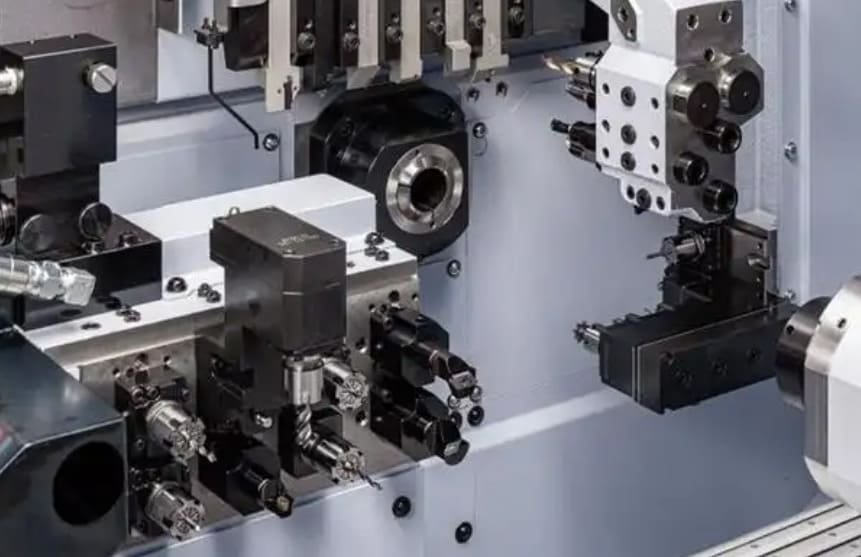
Swiss machining stands as one of the most precise manufacturing methods available today, enabling the production of incredibly small, complex parts with exceptional accuracy. Originally developed for watchmaking, this specialized turning process has evolved into an essential technology for industries requiring high-precision components. In this comprehensive guide, we’ll explore what makes Swiss machining unique, how it works, and why it might be the ideal solution for your precision manufacturing needs.
What Is Swiss Machining?
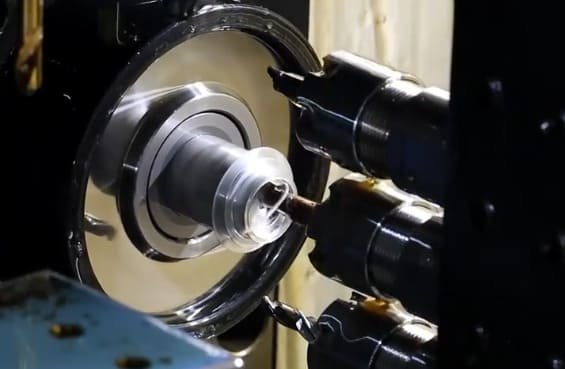
Swiss machining, also known as Swiss turning or Swiss screw machining, is a specialized CNC machining process designed specifically for producing small, high-precision parts with tight tolerances. Unlike conventional turning operations, Swiss machining employs a unique sliding headstock design that feeds the workpiece through a guide bushing, providing exceptional support during the cutting process.
The defining characteristic of Swiss machining is how the material is held and moved during the cutting process. While a standard lathe holds the workpiece stationary in a collet with only rotational movement, a Swiss-type lathe advances the material through a guide bushing along the longitudinal axis. This fundamental difference allows for superior precision, especially when machining long, slender parts that would otherwise be prone to deflection.
With the ability to achieve tolerances as tight as ±0.0001 inches (±0.0025mm), Swiss machining excels at creating components where precision is non-negotiable. The process is particularly valuable for parts with high length-to-diameter ratios (up to 20:1) that would be challenging or impossible to produce on conventional lathes.
History and Origins of Swiss-Style Lathes
The story of Swiss machining begins in Switzerland during the 1870s, when watchmaker Jakob Schweizer developed the first sliding headstock lathe. Facing the challenge of producing increasingly smaller watch components with the precision the industry demanded, Schweizer created an innovative solution that would revolutionize precision manufacturing.
His invention addressed a critical problem: when machining small-diameter parts on conventional lathes, the further the cutting tool moved from the collet, the more the workpiece would deflect, resulting in inaccuracies. Schweizer’s design supported the material close to the cutting tool via a guide bushing, virtually eliminating deflection and enabling unprecedented precision.
This breakthrough technology quickly became essential to Switzerland’s renowned watchmaking industry, helping establish the country’s reputation for exceptional precision and quality. The term “Swiss-type” became synonymous with this specific lathe design and the high level of accuracy it delivered.
While the fundamental principles remain the same, today’s Swiss machines have evolved dramatically with CNC technology, multiple axes of motion, live tooling capabilities, and advanced automation features that extend their applications far beyond watchmaking.
How Swiss Machining Works
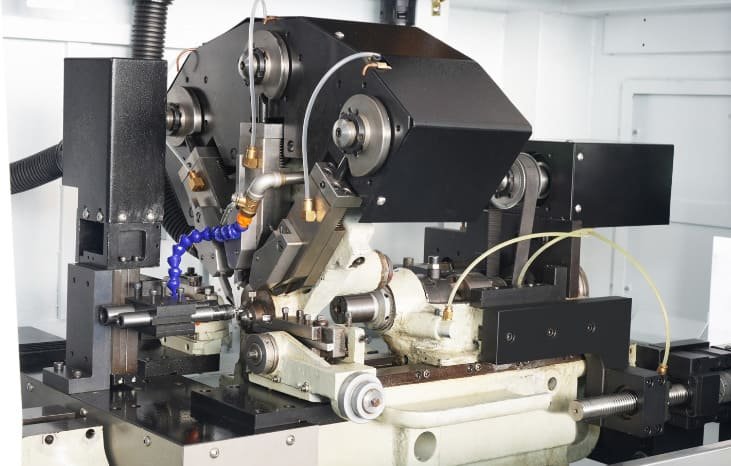
The Sliding Headstock and Guide Bushing Mechanism
- Bar stock is fed through a collet in the sliding headstock.
- The material passes through a guide bushing, which provides critical support just millimeters away from where cutting occurs.
- As machining progresses, the headstock slides forward, feeding material through the guide bushing into the cutting zone.
- Cutting tools remain stationary while the material moves, maintaining a constant distance between the cutting point and support point.
- This continuous support near the cutting area virtually eliminates deflection, even on long, thin workpieces.
Modern Swiss machines typically feature multiple tool positions arranged around the workpiece, allowing for simultaneous operations. Many also include a sub-spindle or counter-spindle that can grab the workpiece as it’s cut off, enabling machining on both ends without manual intervention.
Key Components of a Swiss-Type Lathe
- Sliding Headstock: Holds the bar stock and moves it forward along the Z-axis.
- Guide Bushing: Provides support for the workpiece close to the cutting area.
- Main Spindle: Rotates the workpiece at high speeds.
- Tool Carriers: Hold multiple cutting tools that can operate simultaneously.
- Sub-Spindle: Enables back-working operations on the opposite end of the part.
- CNC Control System: Coordinates all movements with extreme precision.
Key Advantages of Swiss Machining
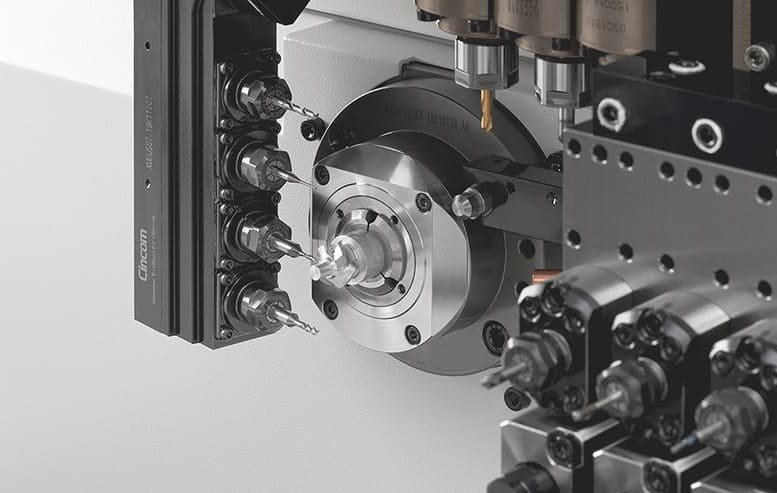
Advantages of Swiss Machining
- Exceptional Precision: Achieves tolerances as tight as ±0.0001 inches.
- Superior Surface Finishes: Produces excellent surface quality with minimal tool marks.
- Reduced Deflection: Guide bushing support minimizes workpiece deflection.
- High Production Efficiency: Simultaneous operations reduce cycle times.
- Excellent for Long, Slender Parts: Can machine parts with length-to-diameter ratios up to 20:1.
- Complex Geometries: Multiple tool positions enable intricate features.
- Complete Parts in One Setup: Reduces handling and improves consistency.
- Automation Capabilities: Bar feeders enable continuous operation.
Limitations to Consider
- Size Limitations: Typically limited to parts under 1.25″ (32mm) in diameter.
- Higher Initial Cost: Swiss machines are more expensive than conventional lathes.
- Material Requirements: Often requires higher-quality bar stock.
- Programming Complexity: More axes and tools mean more complex programming.
- Setup Time: Initial setup can be more time-consuming.
Precision and Efficiency Benefits
The precision advantages of Swiss machining become particularly valuable when producing components that must function flawlessly in critical applications. The ability to maintain tight tolerances consistently across production runs ensures reliability in the final product.
From an efficiency standpoint, Swiss machines excel at reducing cycle times through simultaneous operations. While a conventional lathe might require multiple setups and operations to complete a complex part, a Swiss machine can often produce the complete component in a single setup, dramatically reducing production time and improving consistency.
Applications and Industries
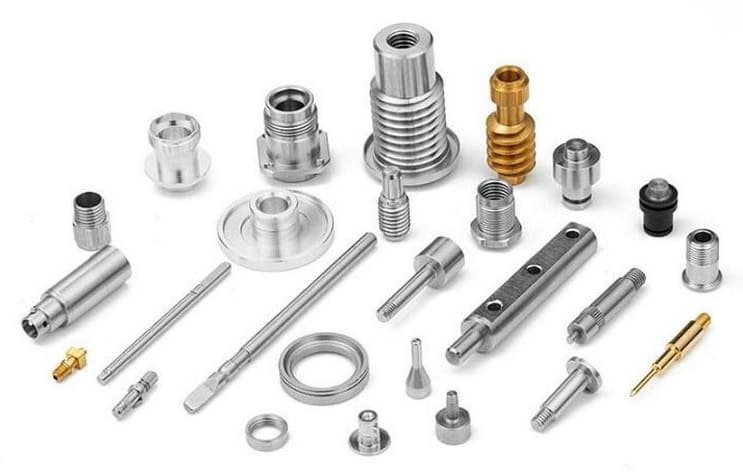
Swiss machining has become indispensable across numerous industries where precision, quality, and reliability are paramount. Here are some of the key sectors that rely heavily on Swiss-machined components:
Medical
- Bone screws and implants
- Surgical instruments
- Dental components
- Drug delivery devices
- Diagnostic equipment parts
Aerospace
- Fuel system components
- Hydraulic fittings
- Sensor housings
- Fasteners and connectors
- Control system parts
Electronics
- Connector pins
- Switch components
- Heat sinks
- Camera mechanisms
- Mobile device parts
Automotive
- Fuel injector components
- Transmission parts
- ABS system components
- Sensor housings
- Precision valves
Watchmaking
- Movement components
- Gear trains
- Pinions
- Screws and fasteners
- Case components
Defense
- Firing pins
- Trigger mechanisms
- Guidance system parts
- Communication device components
- Optical system parts
Materials Used in Swiss Machining
| Material | Properties | Common Applications |
| Stainless Steel | Corrosion resistance, biocompatibility, strength | Medical implants, food processing equipment, marine components |
| Titanium | Exceptional strength-to-weight ratio, biocompatibility, corrosion resistance | Aerospace components, medical implants, high-performance parts |
| Aluminum | Lightweight, good thermal conductivity, corrosion resistance | Electronics housings, aerospace components, consumer products |
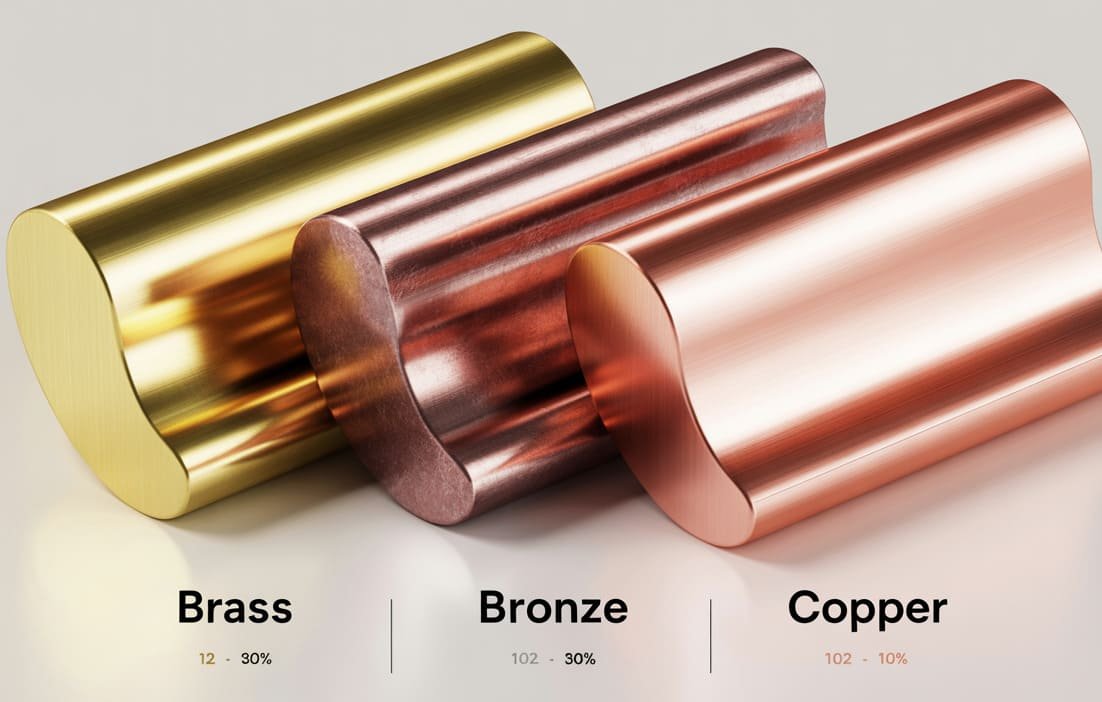
| Brass | Excellent machinability, electrical conductivity, corrosion resistance | Electrical connectors, plumbing components, decorative parts |
| Copper | Superior electrical conductivity, thermal conductivity, ductility | Electrical connectors, heat exchangers, conductive components |
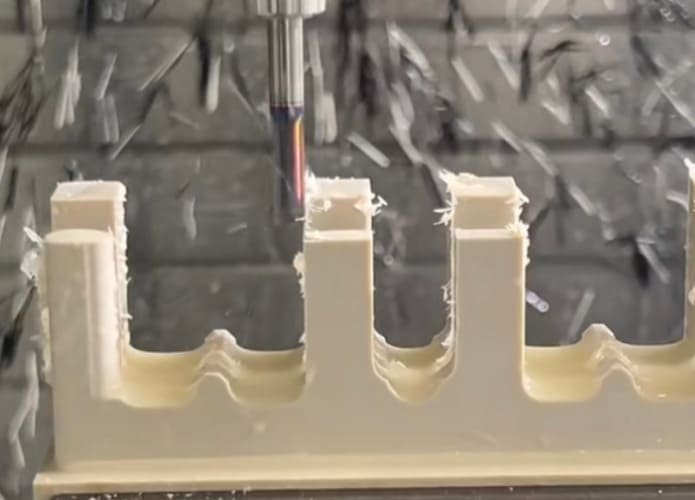
| Plastics (PEEK, Delrin, etc.) | Lightweight, chemical resistance, electrical insulation | Medical devices, electrical insulators, lightweight components |
| Nickel Alloys | High-temperature strength, corrosion resistance | Aerospace, chemical processing, high-temperature applications |
Material selection for Swiss machining often requires consideration of not just the end-use requirements but also machinability factors. Since Swiss machines typically operate at high speeds with small-diameter tools, materials that machine cleanly without excessive tool wear are preferred. Additionally, the bar stock quality is particularly important, as variations in diameter can affect the performance of the guide bushing.
Swiss Machining vs. Conventional CNC Machining
Understanding the differences between Swiss machining and conventional CNC turning helps in selecting the right process for specific manufacturing needs:
| Feature | Swiss Machining | Conventional CNC Turning |
| Headstock Design | Sliding headstock that moves the material | Fixed headstock that holds material stationary |
| Workpiece Support | Guide bushing supports material near cutting point | Support at chuck/collet and possibly tailstock |
| Typical Part Size | Small diameter (typically | Wider range, including larger diameters |
| Length-to-Diameter Ratio | Can handle up to 20:1 ratios effectively | Limited to approximately 4:1 without special support |
| Precision | Extremely high (±0.0001″ typical) | Good but typically less precise (±0.0005″ typical) |
| Cycle Time | Faster for complex small parts due to simultaneous operations | Typically longer for complex parts requiring multiple operations |
| Setup Time | Longer initial setup time | Generally quicker setup |
| Bar Stock Requirements | Higher quality (straightness, diameter consistency) | Less stringent requirements |
| Cost | Higher machine and tooling costs | Lower initial investment |
While Swiss machining offers superior precision and efficiency for small, complex parts, conventional CNC turning remains more cost-effective for larger components or simpler geometries. Many machine shops maintain both capabilities to address a wider range of manufacturing needs.
Considerations When Choosing Swiss Machining
When evaluating whether Swiss machining is the right choice for your manufacturing needs, consider these key factors:
When Swiss Machining Is Ideal
- Part Geometry: Small diameter parts (typically under 1.25″) with high length-to-diameter ratios.
- Precision Requirements: Components requiring extremely tight tolerances (±0.0001″ or better).
- Complexity: Parts with multiple features that would require several operations on conventional equipment.
- Production Volume: Medium to high-volume production runs where the initial setup costs can be amortized.
- Material Considerations: When working with expensive materials where minimizing waste is important.
- Surface Finish: Applications requiring superior surface finishes with minimal tool marks.
Cost Considerations
While Swiss machining can deliver exceptional quality and efficiency, it typically comes with higher costs in several areas:
- Machine Investment: Swiss-type lathes are generally more expensive than conventional CNC lathes.
- Tooling Costs: Specialized tooling for Swiss machines can be more expensive.
- Programming Time: More complex programming due to multiple axes and simultaneous operations.
- Setup Time: Initial setup is typically more time-consuming than with conventional lathes.
- Material Requirements: Higher quality bar stock is often necessary for optimal performance.
Despite these higher costs, Swiss machining can be more economical in the long run for appropriate applications due to faster cycle times, reduced secondary operations, and higher part quality that minimizes scrap and rework.
The Future of Swiss Machining
As manufacturing continues to evolve, Swiss machining technology is advancing with innovations in automation, multi-axis capabilities, and integration with digital manufacturing systems. These developments are further expanding the capabilities and efficiency of Swiss machining, making it an increasingly valuable solution for precision manufacturing challenges.
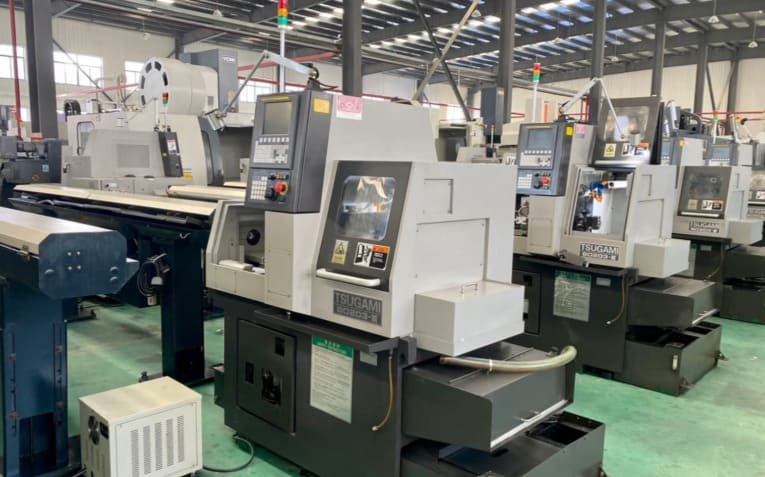
CNCPOR Factory is equipped with 300 Tsugami Swiss-type lathes, which can meet the order requirements of different customers. If you have precision parts that need to be processed by Swiss-type lathes, please feel free to contact us for a fast and accurate quotation.