
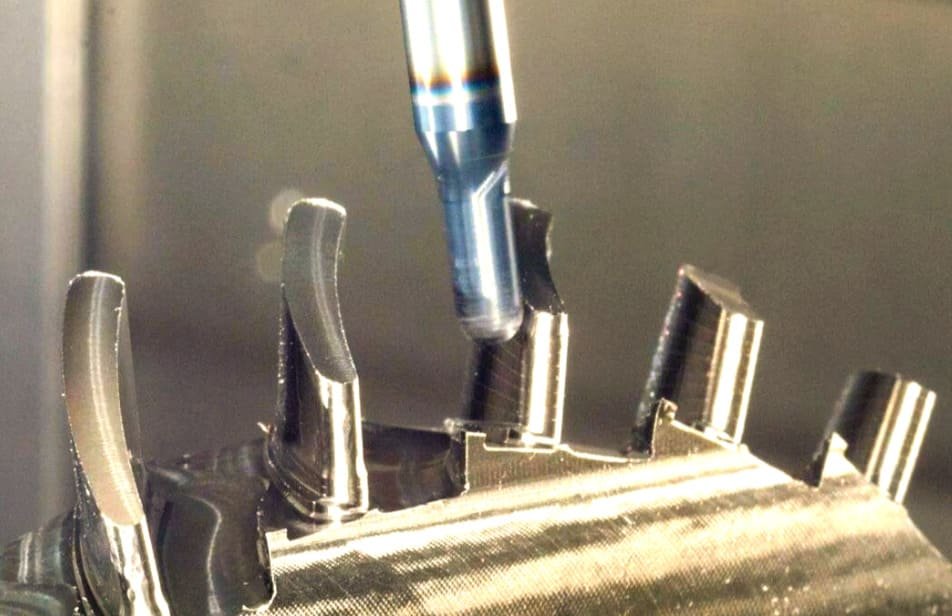
High-speed machining (HSM) represents a significant advancement in manufacturing technology, transforming how metals and other materials are processed. Rather than relying on conventional heavy cuts at slower speeds, HSM leverages faster, lighter cuts to achieve superior results. This approach not only increases productivity but also enhances surface finish quality and extends tool life. In this comprehensive guide, we’ll explore the fundamentals of high-speed machining, its benefits, implementation requirements, and future trends.
Defining High-Speed Machining
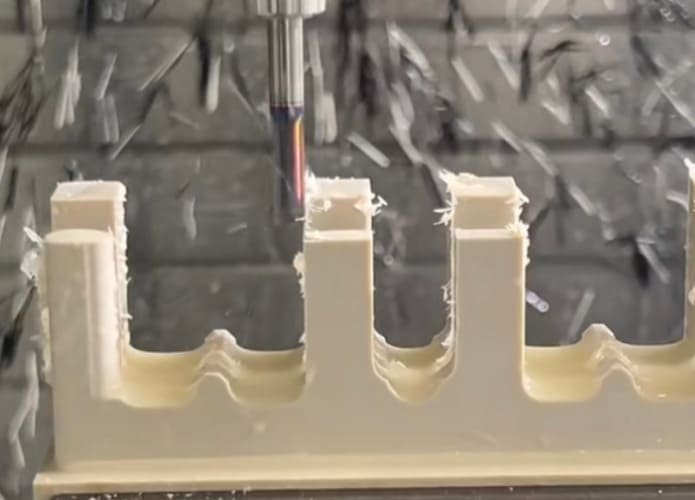
High-speed machining (HSM) is a metal cutting technique that combines increased cutting speeds and feed rates with specialized toolpaths to achieve higher material removal rates while maintaining or improving part quality. Unlike conventional machining, HSM replaces slow, heavy cuts with fast, lighter cuts that distribute heat and forces more effectively.
The definition of HSM isn’t tied to a specific RPM threshold, though many consider 15,000 RPM and above to be the starting point. Rather, HSM is better understood as a comprehensive approach to machining that includes:
- Machining at high cutting speeds (vc)
- Operating with high spindle speeds (n)
- Utilizing high feed rates (vf)
- Achieving high material removal rates (Q)
- Employing specialized toolpath strategies
Interestingly, high-speed machining is not defined by using large axial or radial depths of cut. In fact, HSM typically employs shallower cuts than conventional machining, but achieves greater efficiency through optimized cutting parameters and tool engagement.
Fundamental Principles of High-Speed Machining
The effectiveness of high-speed machining is built upon several key mechanical and thermal principles that differentiate it from conventional machining approaches.
Salomon Hypothesis: Temperature Paradox
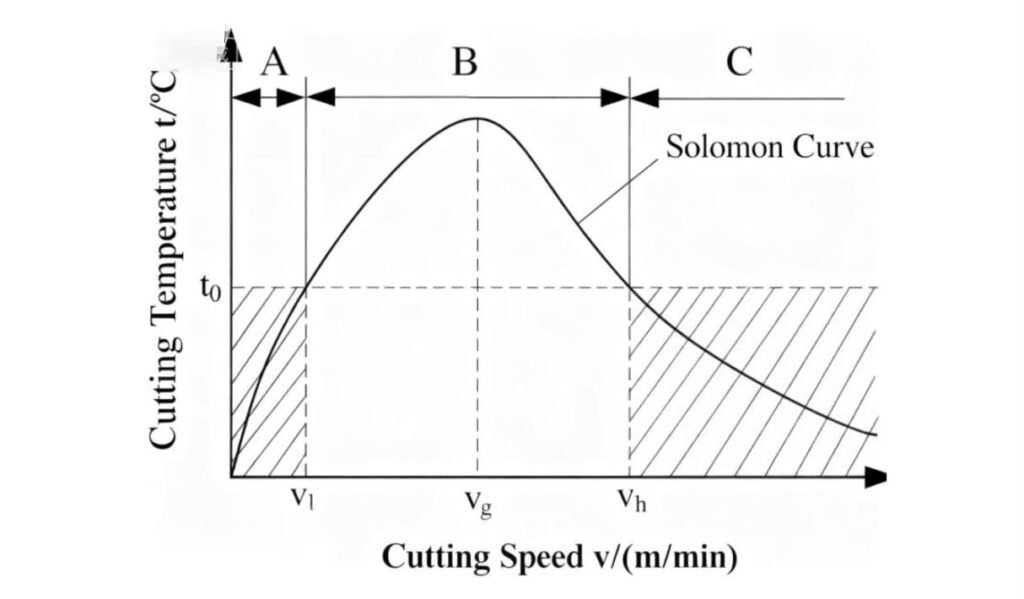
The Salomon hypothesis is a high-speed cutting theory proposed by German scholar Dr. Carl Salomon in 1931. One of the most fascinating aspects of HSM is demonstrated by the Solomon Curve, which shows that after a certain cutting speed threshold, the temperature at the cutting edge actually begins to decrease. This counterintuitive phenomenon occurs because at very high speeds, the heat generated has less time to transfer into the tool and workpiece, with more heat being carried away by the chips.
Radial Chip Thinning
When the width of cut is less than half the cutter’s diameter (as is common in HSM), radial chip thinning occurs. This means the actual chip thickness is less than the programmed chip load. To compensate, HSM requires increased feed rates to maintain optimal chip thickness, which contributes to higher material removal rates despite lighter cuts.
Constant Tool Engagement Angle
Traditional toolpaths force cutting tools to work harder in corners, where engagement suddenly increases. HSM toolpaths maintain a consistent tool engagement angle throughout the cut, avoiding the “tyranny of the corner” and allowing for more consistent cutting forces and higher overall feed rates.
Key Advantages of High-Speed Machining
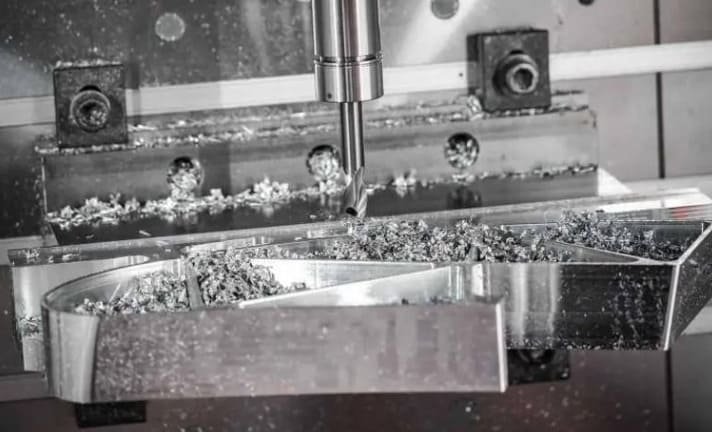
- Increased material removal rates and productivity.
- Improved surface finish quality, often eliminating secondary operations.
- Extended tool life despite higher speeds.
- Reduced cutting forces and heat transfer to workpiece.
- Better dimensional accuracy and part quality.
- Ability to machine thin-walled features more effectively.
- Lower power consumption per volume of material removed.
- Reduced overall manufacturing costs for complex parts.
The transition from conventional to high-speed machining represents a paradigm shift in manufacturing efficiency. By distributing cutting forces and heat more effectively, HSM achieves superior results across multiple performance metrics.
Applications and Industries Utilizing High-Speed Machining
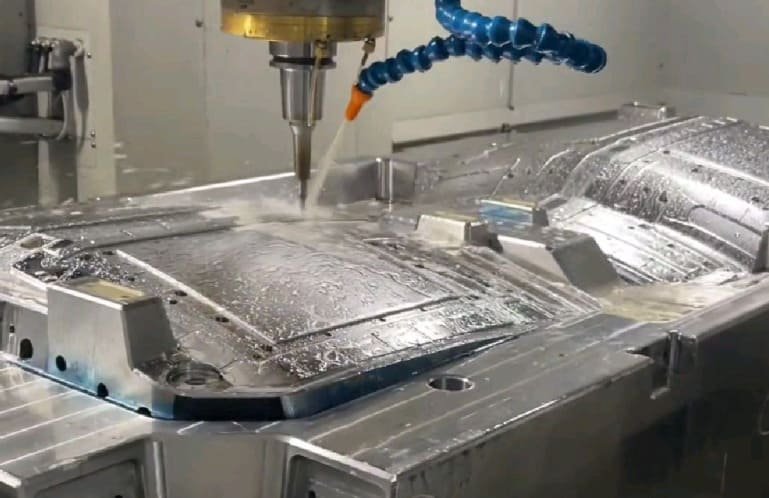
High-speed machining has found widespread adoption across numerous industries, particularly those requiring complex geometries, high precision, or working with challenging materials.
Aerospace
The aerospace industry was an early adopter of HSM, using it to efficiently machine aluminum structural components and titanium parts. HSM enables the creation of monolithic structures that reduce weight while maintaining strength, crucial for aircraft efficiency.
Medical
Medical device manufacturers leverage HSM to create intricate implants and surgical instruments from materials like titanium and stainless steel. The precision and surface finish achieved eliminate the need for secondary operations.
Die and Mold
The die and mold industry benefits significantly from HSM when working with hardened steels. The technique reduces EDM requirements, shortens lead times, and improves surface finish quality on complex mold surfaces.
Other industries embracing high-speed machining include automotive (for engine components and transmission parts), electronics (for precision housings and heat sinks), and energy (for turbine components). The versatility of HSM makes it valuable wherever complex geometries meet demands for efficiency.
High-Speed Machining Techniques
Several specialized machining techniques have evolved to maximize the benefits of high-speed machining. These approaches focus on maintaining consistent cutting conditions and optimizing tool engagement.
| Technique | Description | Best Applications | Key Benefits |
| Trochoidal Milling | Uses circular or spiral tool paths to maintain constant chip thickness | Slot machining, pocket clearing | Reduces tool load, enables higher feed rates, extends tool life |
| Adaptive Clearing | Dynamically adjusts toolpath to maintain constant tool engagement angle | Complex pocket clearing, general roughing | Maximizes material removal rates, prevents tool overloading |
| High Feed Milling | Uses specialized cutters with small axial depths and very high feed rates | Face milling, roughing operations | Extremely high material removal rates, reduced cutting forces |
| Plunge Roughing | Utilizes the end of the tool with vertical plunging movements | Deep pockets, machines with limited lateral rigidity | Directs forces axially, reduces vibration, works with slower spindles |
| Corner Slicing/Peeling | Uses arc movements to gradually remove material from corners | Internal corners, avoiding full tool engagement | Prevents tool overload in corners, maintains consistent cutting forces |
The selection of the appropriate HSM technique depends on the specific application, machine capabilities, and workpiece requirements. Modern CAM software packages typically include specialized HSM toolpath strategies that implement these techniques automatically.
Technical Requirements for Implementing High-Speed Machining
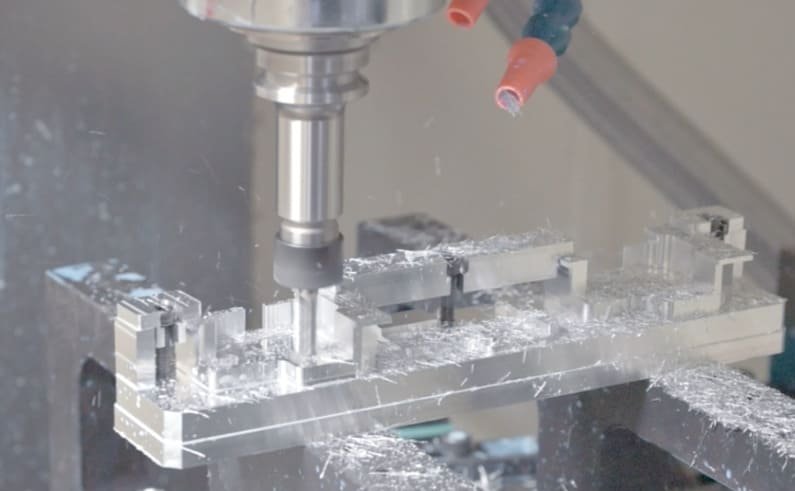
Successfully implementing high-speed machining requires attention to several critical components of the machining system.
1. Machine Tool Requirements
Not all machine tools are suitable for high-speed machining. Key machine characteristics include:
- Rigid Construction – Machine bases made from polymer granite or other vibration-dampening materials provide the stability needed for HSM.
- High Acceleration/Deceleration – Rapid axis movement capabilities (up to 1.7G) are essential for executing complex HSM toolpaths.
- Thermal Stability – Temperature compensation systems prevent dimensional errors during extended high-speed operations.
- Advanced Control Systems – Controllers with look-ahead capability anticipate directional changes to maintain smooth motion.
- Efficient Chip Evacuation – Systems to quickly remove the high volume of chips generated during HSM.
2. Cutting Tool Considerations
Specialized cutting tools for HSM feature:
- Balanced Design – Tools must be precisely balanced to prevent vibration at high RPMs.
- Advanced Coatings – TiAlN, AlCrN and other coatings protect tools at high temperatures.
- Optimized Geometries – Special edge preparations and flute designs manage chip evacuation.
- Premium Tool Materials – Carbide grades optimized for high-speed applications.
3. Toolholding Systems
Proper tool holding is critical for HSM success:
- Shrink Fit Holders – Provide superior grip and minimal runout at high speeds.
- HSK Tooling – Hollow Shank Kegel (HSK) interfaces maintain contact at high RPMs.
- Hydraulic Holders – Offer good balance and vibration dampening.
- Precision Balancing – Toolholders must be balanced to G2.5 at 25,000 RPM or better.
4. Software Requirements
Advanced software capabilities enable effective HSM:
- HSM-Specific CAM Strategies – Software that generates optimized toolpaths for constant engagement.
- Feeds and Speeds Calculators – Specialized algorithms that account for radial chip thinning.
- Machine Control Features – High-speed data processing and look-ahead functionality.
- Simulation Capabilities – Verify complex toolpaths before machining.
Challenges and Limitations of High-Speed Machining
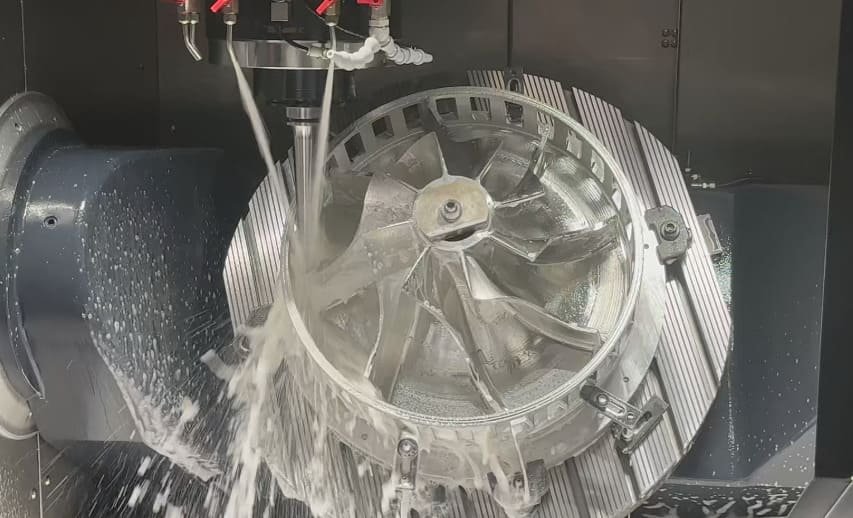
While high-speed machining offers significant benefits, implementing it successfully comes with several challenges that must be addressed:
Machine Limitations
Older machines may lack the rigidity, spindle speed, or control systems necessary for true HSM.
Vibration and Chatter
Higher speeds can amplify vibration issues, requiring careful system tuning.
Heat Management
While HSM can reduce heat transfer to the workpiece, tool cooling remains critical.
Programming Complexity
HSM toolpaths require more sophisticated programming and larger NC files.
Setup Precision
Higher speeds amplify any errors in workholding or tool setup.
Future Trends in High-Speed Machining
AI-Optimized Toolpaths
Artificial intelligence is beginning to revolutionize HSM by dynamically optimizing toolpaths based on real-time feedback. These systems can predict and prevent issues before they occur, further enhancing productivity and tool life.
Hybrid Manufacturing
The integration of high-speed machining with additive manufacturing creates powerful hybrid systems. These machines can build up material and precisely machine it in a single setup, opening new possibilities for complex components.
Sustainable HSM
Environmental considerations are driving development of more sustainable HSM approaches, including minimum quantity lubrication (MQL), dry machining techniques, and energy-efficient machine designs that maximize productivity while minimizing resource consumption.
Other emerging trends include the integration of in-process measurement systems, cloud-based optimization services, and the application of HSM techniques to new materials like composites and ceramics. As computing power continues to increase, the complexity and effectiveness of HSM toolpaths will likely see further improvements.
Conclusion
High-speed machining represents a fundamental shift in manufacturing philosophy, moving from the brute force approach of conventional machining to a more sophisticated strategy that leverages physics and advanced computation. By understanding and applying HSM principles, manufacturers can achieve significant improvements in productivity, quality, and cost-effectiveness.
The journey to successful HSM implementation requires careful consideration of machine capabilities, tooling selection, programming approaches, and operator training. While the challenges are real, the potential benefits make high-speed machining an essential technology for modern manufacturing operations seeking to maintain competitiveness in a global marketplace.
Related Questions
What is the minimum spindle speed required for high-speed machining?
While 15,000 RPM is often cited as the threshold for high-speed machining, there’s no universal minimum. Many HSM techniques can be applied at lower speeds (8,000-12,000 RPM) with appropriate toolpaths and cutting parameters. The focus should be on the overall approach rather than a specific RPM value.
Can high-speed machining be implemented on older machine tools?
Yes, many HSM principles can be applied to older machines, though with some limitations. While you may not achieve the full benefits possible with purpose-built HSM equipment, implementing optimized toolpaths, appropriate tooling, and adjusted cutting parameters can still yield significant improvements in productivity and tool life.
How does high-speed machining affect tool life?
Counterintuitively, proper implementation of HSM often extends tool life despite the higher speeds. This occurs because the consistent engagement angles reduce shock loading, while the higher speeds can move heat away from the cutting edge more effectively. However, this requires appropriate tooling, proper programming, and optimal cutting parameters.
What materials are best suited for high-speed machining?
Aluminum and other non-ferrous metals typically benefit most from HSM due to their machinability at high speeds. However, with appropriate techniques and tooling, HSM principles can be successfully applied to a wide range of materials including steels, titanium, and even hardened tool steels. The specific approach must be tailored to the material properties.